Recap: Let’s Talk Data Centers
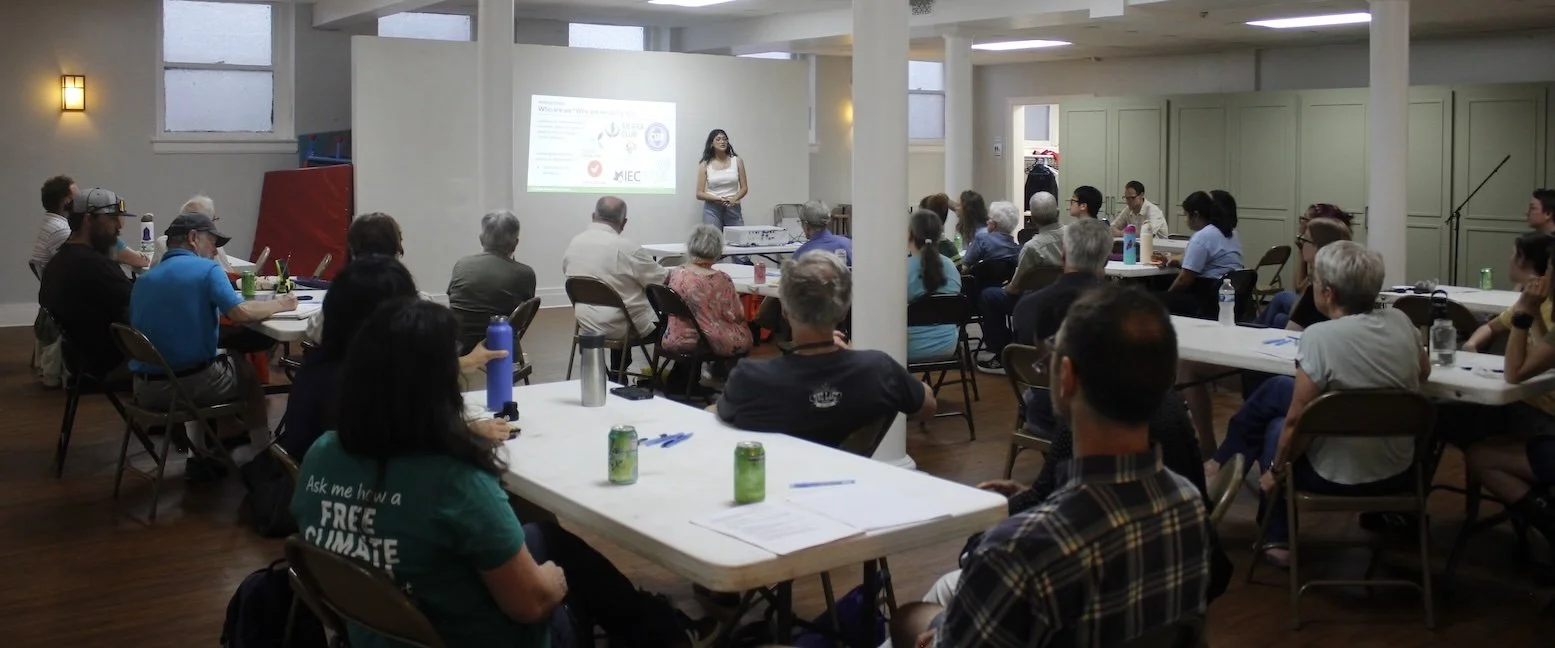
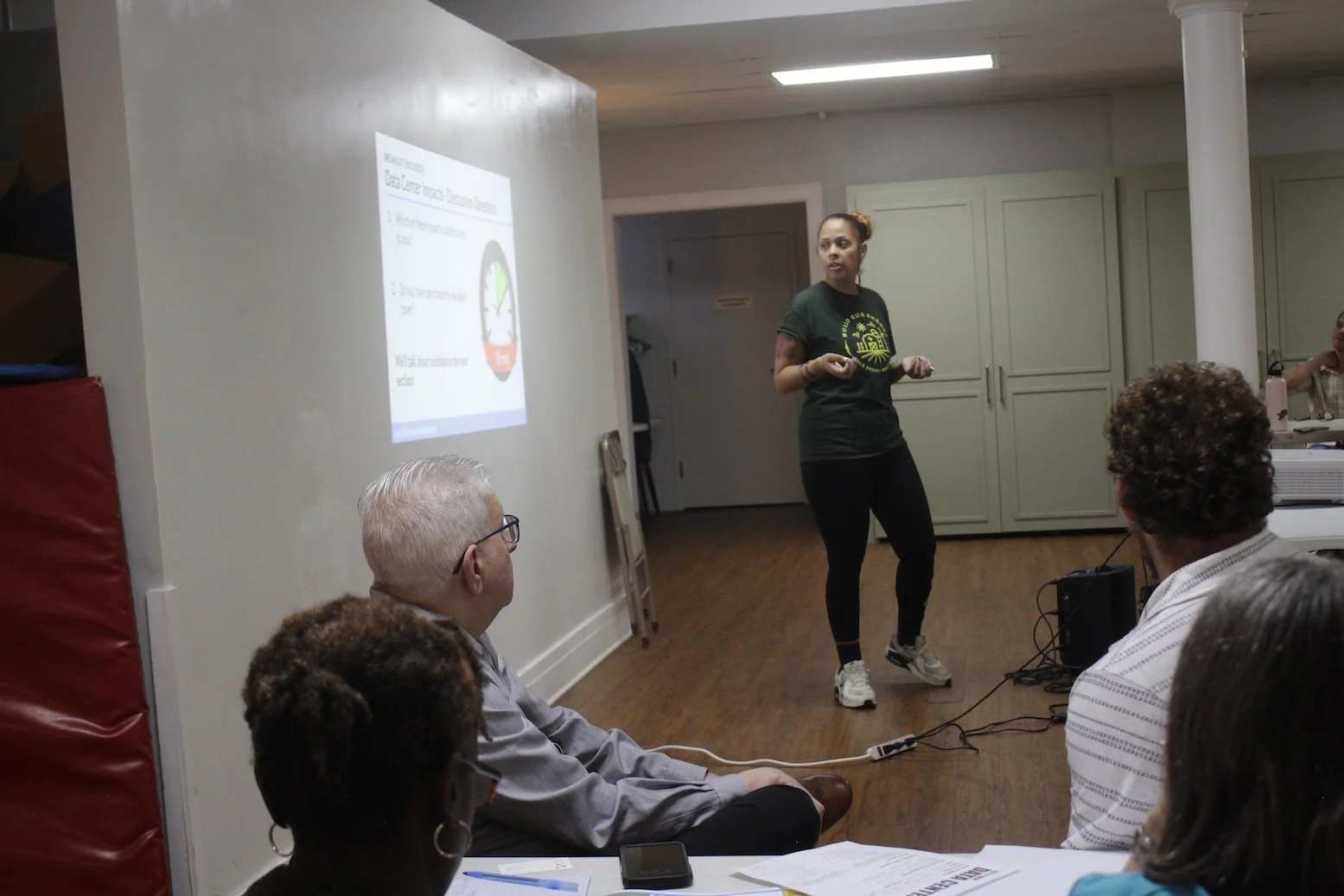
Opening remarks by presenter Jizelle Torres
On June 11th, Oak Park Climate Action Network partnered with Sierra Club, Citizens Utility Board, Prairie Rivers Network, Vote Solar, Faith in Place and Illinois Environmental Council for an enriching presentation and discussion on the facts, implications, and solutions surrounding artificial intelligence data centers.
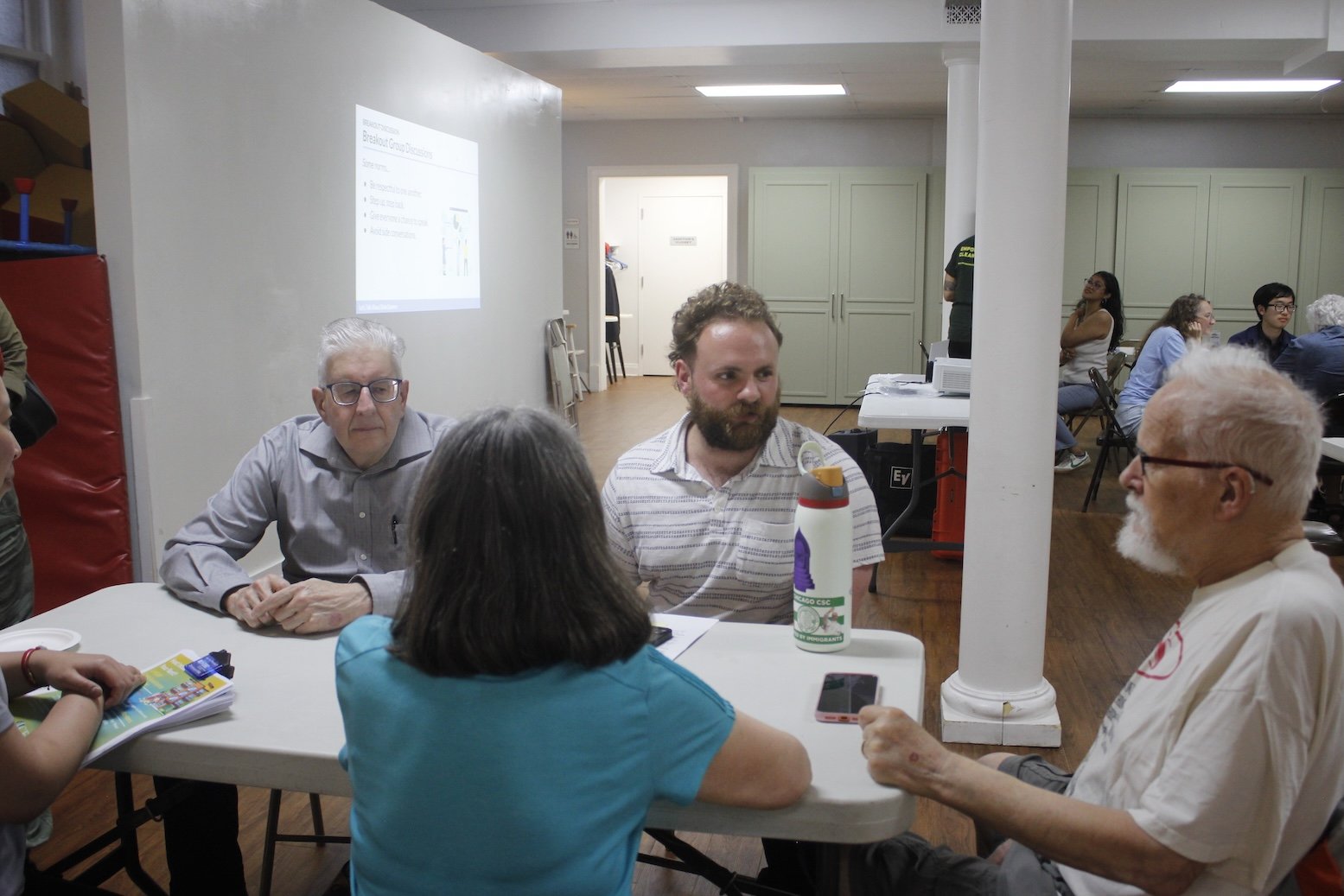
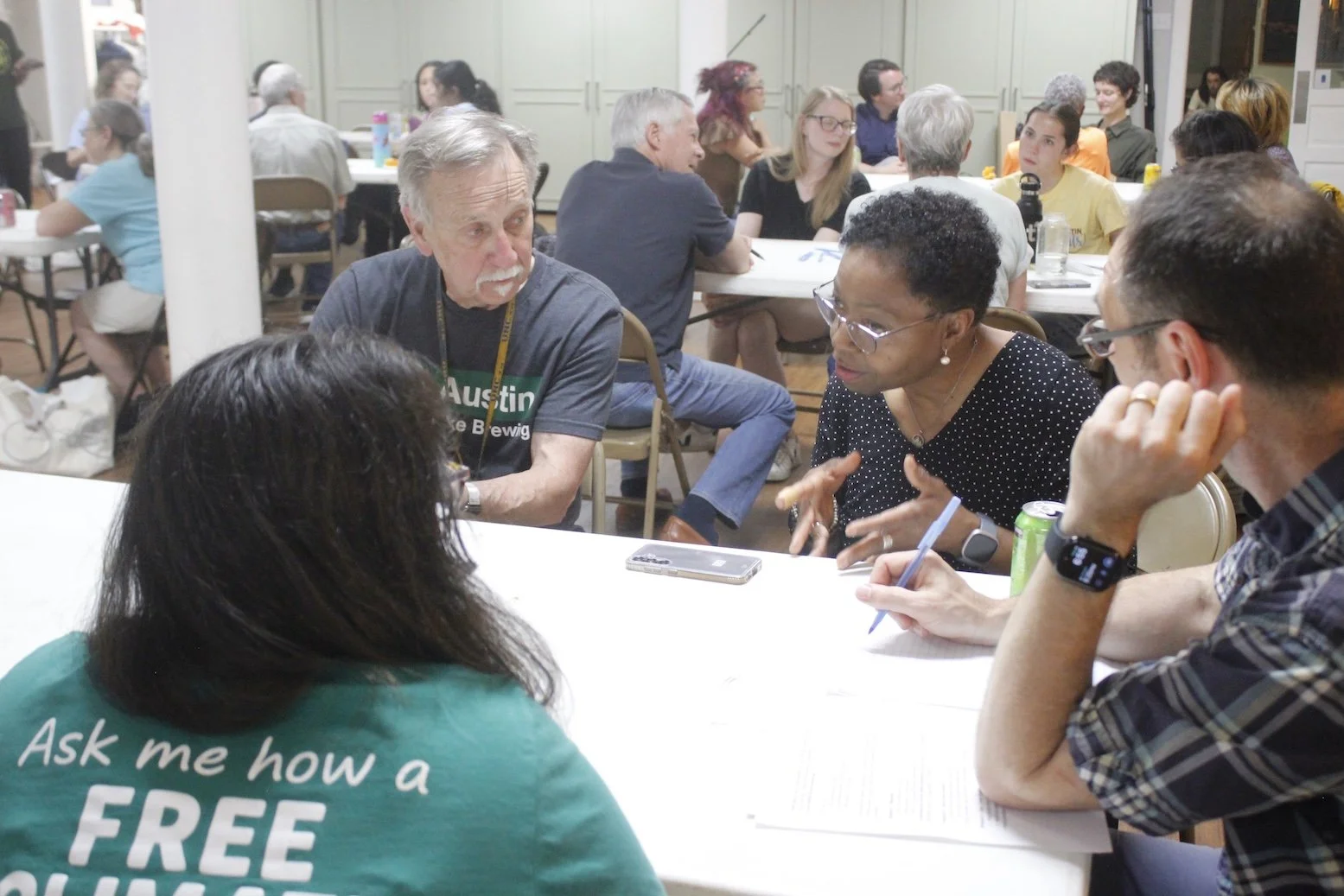
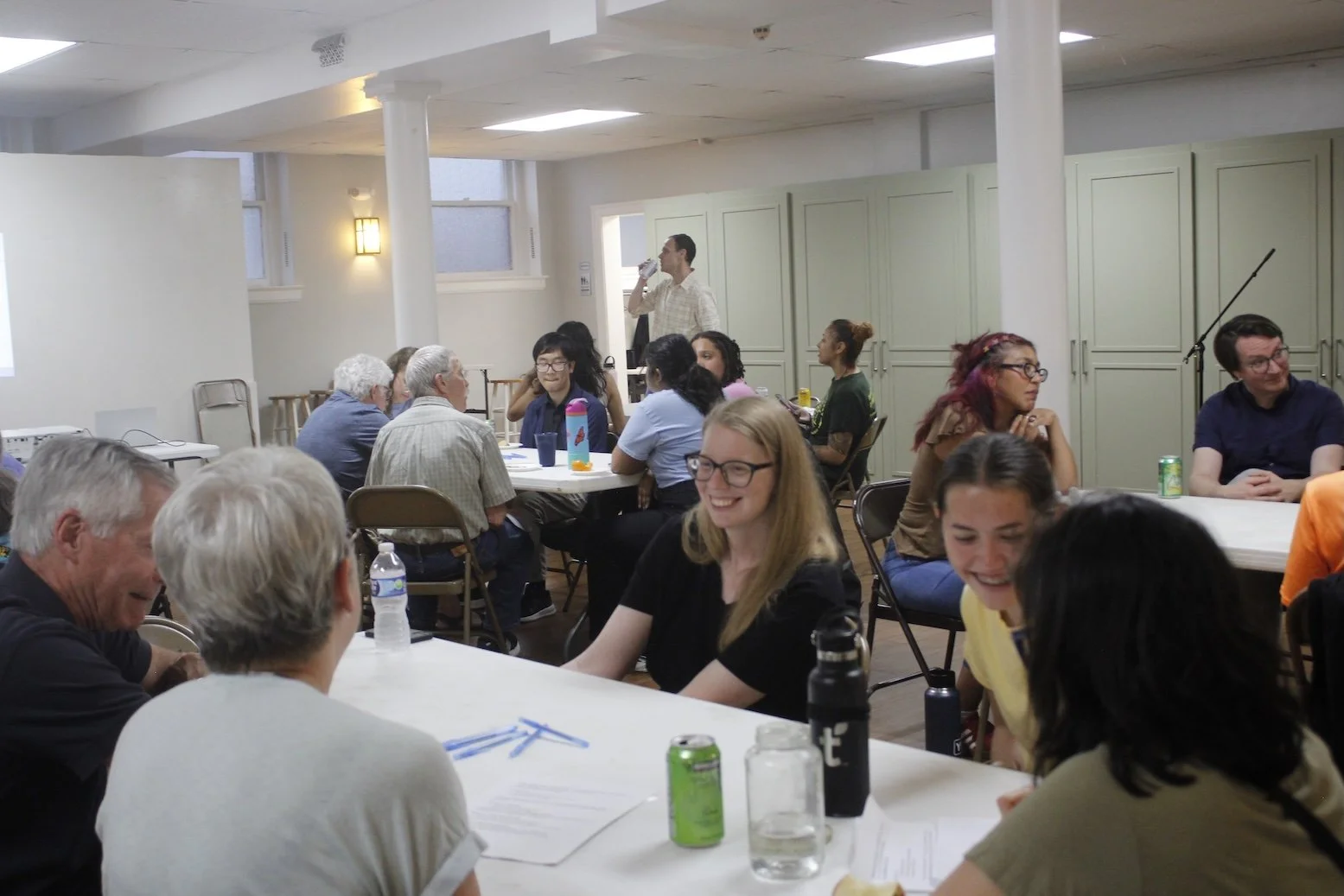
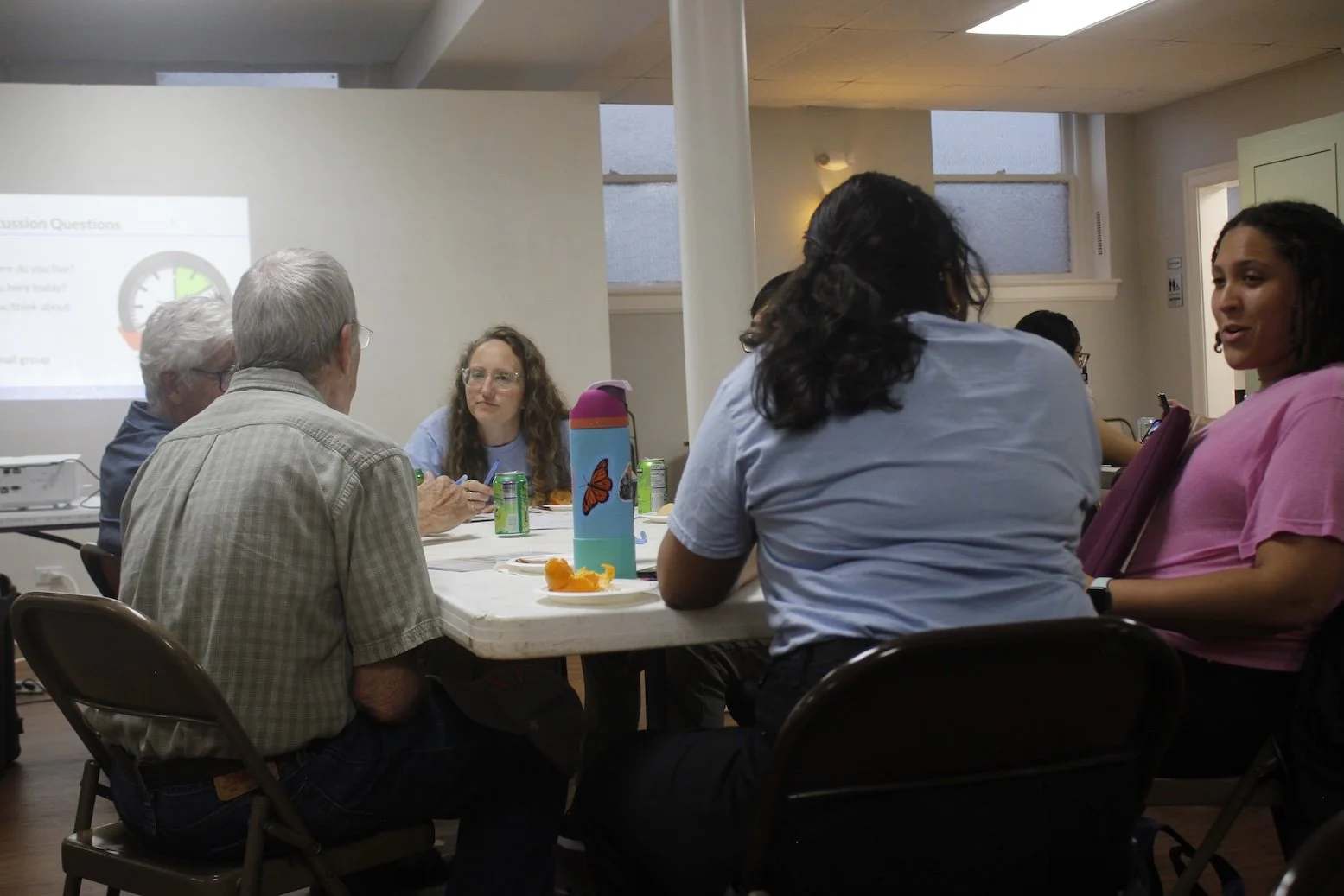
Despite the hazardous weather (yes, even amongst the blare of tornado sirens!) about 40 folks joined us, including our State Representative and Assistant Majority Leader Camille Lilly, gathering at Oak Park’s Pilgrim Congregational Church, demonstrating just how critical this topic is among concerned community members.
For those who were unable to join us, here are our biggest takeaways from the presentation and discussions led by Jizelle Torres (Prairie Rivers Network), Scott Allen (Citizens Utility Board), Nic Faison (Faith in Place), and Kavi Chintam (Vote Solar):
The scale
As more data centers are being proposed and approved throughout the Chicagoland suburbs, it’s crucial to understand the massive scale and expected impacts of these facilities.
Data centers are using water resources at an unreplenishable rate. Evaporative cooling systems required in a single data center can use up to five million gallons of water per day, equivalent to the water usage of a population of 10,000 to 15,000. The water demand coming from these sites is beginning to put stress on Illinois' water supply. While water availability is not a major issue yet, Illinois lacks water monitoring and enforcement policies, important tools to protect ourselves.
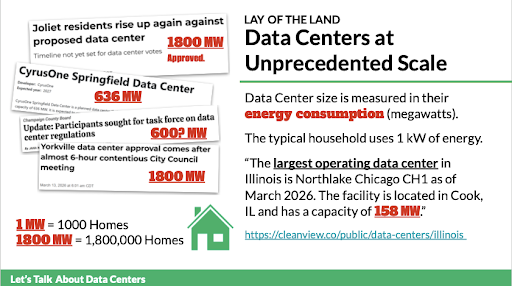
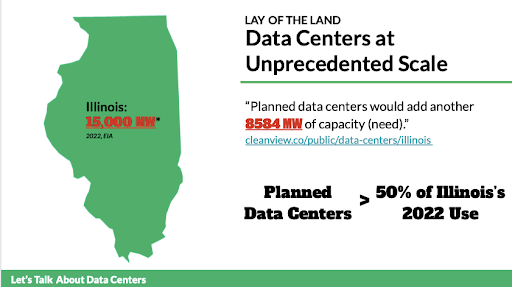
Additionally, if data centers’ predicted extreme energy use becomes a reality, the question becomes: where is the energy coming from to support these major facilities? The approved Joliet data center is expecting a demand of 1800 Megawatts, over half of the 3500 Megawatts used by the city of Chicago. In the face of this demand, grid operators have already expressed concern about having the capacity to meet it. The infrastructure expansion to serve data centers is already driving energy prices and demand, and ratepayers like us are paying the cost.
Data centers are being strategically placed in historically disadvantaged communities. Increased health effects such as asthma from gasses and air pollutants as a result of data centers are disproportionately affecting already marginalized communities.
Technology is constantly changing, getting smaller, narrower. The long term relevance of this technology is uncertain. What happens when AI hits a wall? What happens to the rest of the corporations when only a few prominent companies prevail? Who owns these data centers and what will happen to the infrastructure when they are decommissioned?
The POWER Act
The Protecting Our Water, Energy, and Ratepayers Act, or the Illinois POWER Act, is a landmark proposal ensuring that Illinois data centers’ operations are transparent to local communities and protect their interests. The Act would require data centers to account for their water use and energy demand, engage and support frontline communities, and cover infrastructure and cleanup costs.
Even though 3 out of 4 Illinoisans are in favor of the POWER Act, and advocates led massive efforts like Lobby Days, Moratoriums, Subject Matter Hearings, the POWER Act did not pass in the spring.
So, what can we do? Our call to action!
The first thing we can do is stay connected through our amazing resources like Prairie Rivers Network, Faith in Place, Citizens Utility Board, Sierra Club, Illinois Environmental Council, Vote Solar - and follow OPCAN for more news and events.
The next thing to do is to increase local sponsorship of the POWER Act. Locally, Rep. LaShawn Ford has signed on as a cosponsor. At the event, Assistant Leader Lilly announced her cosponsorship of the POWER Act. Write and thank them for signing on! You can also call or write to Senator Kimberly Lightford, and Senator Don Harmon, and encourage them to sign on as cosponsors. And attend the Harmon and Lilly Townhall on June 23rd at the Oak Park Public Library Main Branch.
We also encourage you to attend Lobby Days (there will be a fall Veto session November 17-19 and December 1-3 with legislators and rallies), and reach out to editors of local newspapers like the Wednesday Journal and express your opinions.
Thank you!
Special thanks to Pilgrim Congregational Church for hosting, and local representatives State Rep Camille Lilly, Oak Park Village Trustee Derek Eder, and staff from State Senator Harmon’s office for attending!
Photos
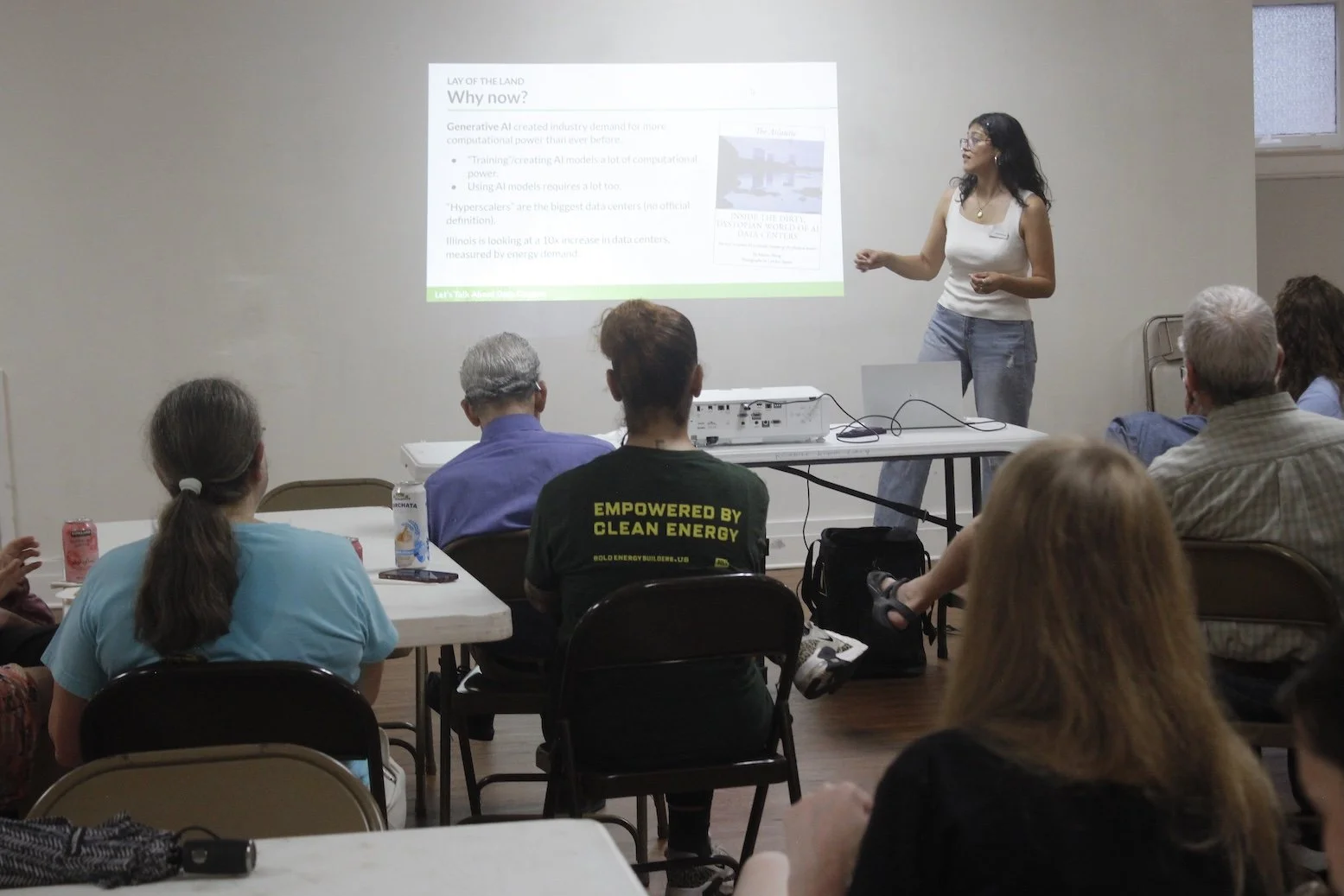
All photos by Manolo Avolos
